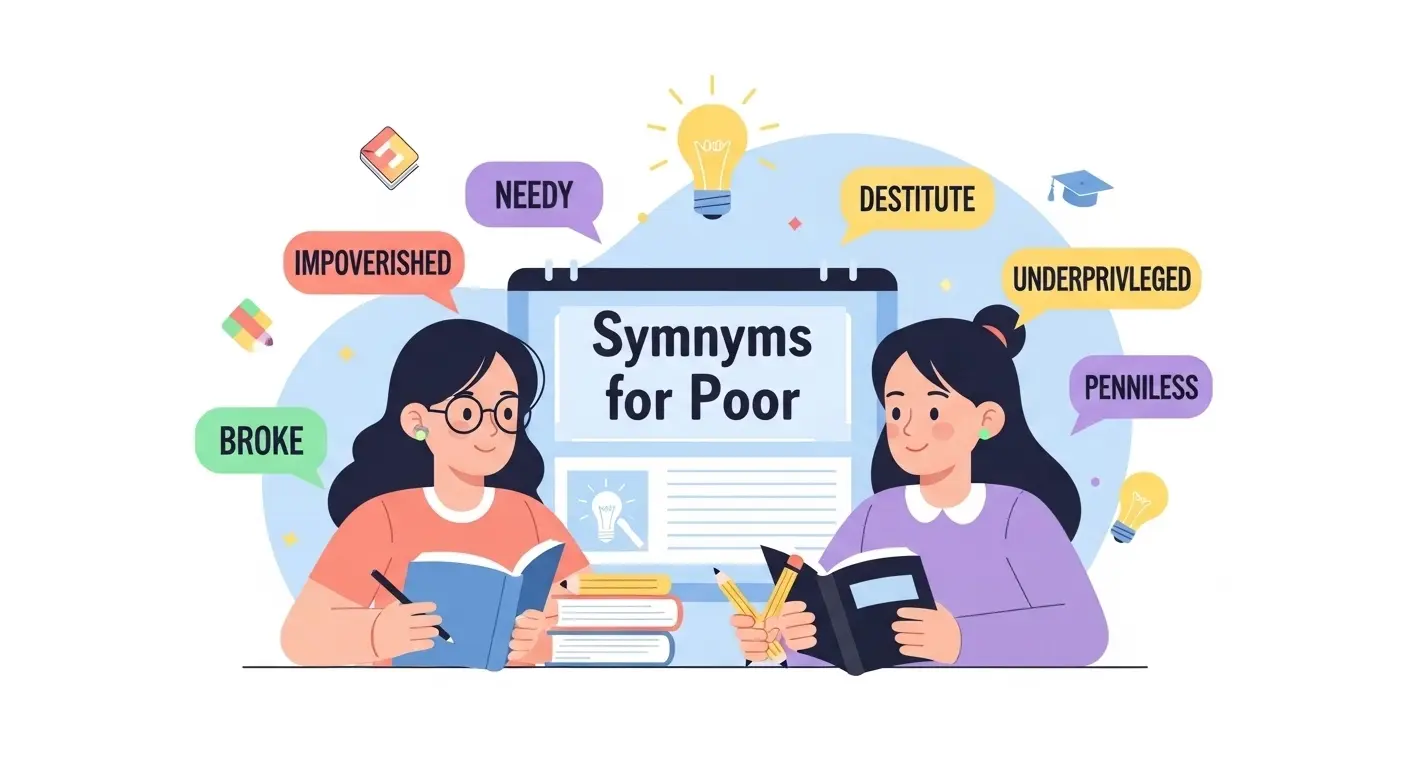
Have you ever wanted to describe someone as “poor” but felt the word sounded too simple or harsh? Maybe you were writing an essay, a story, or a blog post and needed more variety. Understanding synonyms for the poor can make your writing more interesting and expressive.
For example, imagine a character in a story who struggles to buy food. Instead of just saying “He is poor,” you could use a word like “impoverished” or “needy.” This adds depth and clarity. The word “poor” means someone who does not have enough money or resources.
Learning synonyms for poor is useful for students, bloggers, content writers, and anyone using English daily. It helps in writing emails, essays, and stories more naturally. Using these words can make your English sound smart and friendly.
Main Content – Synonyms List
1. Impoverished
Meaning:
- Having very little money or resources.
Examples:
- The village was impoverished after the storm.
- Many children in the city are impoverished.
2. Needy
Meaning:
- Lacking basic necessities.
Examples:
- The needy family asked for help.
- She donates clothes to needy children.
3. Destitute
Meaning:
- Having nothing at all.
Examples:
- The old man was destitute and alone.
- Many destitute people live on the streets.
4. Indigent
Meaning:
- Very poor and needing help.
Examples:
- The charity helps indigent families.
- He grew up in an indigent neighborhood.
5. Penniless
Meaning:
- Having no money.
Examples:
- After losing his job, he was penniless.
- She felt penniless at the end of the month.
6. Underprivileged
Meaning:
- Lacking advantages others have.
Examples:
- The school helps underprivileged children.
- Many underprivileged families need support.
7. Deprived
Meaning:
- Not having enough basic things.
Examples:
- The region is deprived of clean water.
- Deprived children need extra care.
8. Low-income
Meaning:
- Earning little money.
Examples:
- Low-income families often struggle to pay rent.
- She works hard in a low-income job.
9. Broke
Meaning:
- Having no money right now.
Examples:
- I am broke until payday.
- He was broke after buying a new phone.
10. Insolvent
Meaning:
- Unable to pay debts.
Examples:
- The company became insolvent last year.
- He declared himself insolvent after the losses.
11. Beggarly
Meaning:
- Extremely poor or meager.
Examples:
- They lived a beggarly life in the city.
- The man earned a beggarly salary.
12. Hard-up
Meaning:
- Short of money.
Examples:
- She is hard-up this month.
- Many students are hard-up during exams.
13. Skint
Meaning:
- Informal word for having no money.
Examples:
- I’m skint until Friday.
- He’s skint after the trip.
14. Necessitous
Meaning:
- Lacking necessities.
Examples:
- The charity helps the necessitous.
- Necessitous families live in poor conditions.
15. Small-minded
Meaning:
- (Rarely used as poor) Lacking resources or outlook.
Examples:
- The small-minded man could not donate.
- He grew up in a small-minded neighborhood.
16. Meager
Meaning:
- Very little, not enough.
Examples:
- She lived on a meager salary.
- The meal was meager but enough.
17. Deficient
Meaning:
- Lacking what is needed.
Examples:
- The town is deficient in resources.
- He felt deficient in money.
18. Underresourced
Meaning:
- Not having enough resources.
Examples:
- The school is underresourced.
- Many underresourced hospitals need help.
19. Tight
Meaning:
- Having little money.
Examples:
- I’m tight this week.
- Things are tight financially.
20. Unprosperous
Meaning:
- Not wealthy or successful.
Examples:
- The town was unprosperous after the recession.
- He comes from an unprosperous family.
21. Moneyless
Meaning:
- Without money.
Examples:
- He is completely moneyless this month.
- Many students are moneyless in college.
22. Down-and-out
Meaning:
- Homeless and poor.
Examples:
- The down-and-out man slept on the street.
- Many down-and-out families need support.
23. Beggared
Meaning:
- Made poor by circumstances.
Examples:
- The fire beggared many families.
- He was beggared after the accident.
24. Poorly-off
Meaning:
- Having little money.
Examples:
- They are poorly-off but happy.
- Many are poorly-off in rural areas.
25. Pinched
Meaning:
- Short of money.
Examples:
- She felt pinched at the end of the month.
- He’s pinched after buying gifts.
26. Shabby
Meaning:
- Poor in appearance or quality.
Examples:
- He lives in a shabby house.
- The clothes looked shabby.
27. Modest
Meaning:
- Small, limited resources.
Examples:
- They have a modest home.
- She earns a modest salary.
28. Broken
Meaning:
- Informal, has no money.
Examples:
- I am broken after shopping.
- He was broken last week.
29. Bare
Meaning:
- Nothing extra, very little.
Examples:
- The cupboard was bare.
- She had bare savings.
30. Scanty
Meaning:
- Very little or insufficient.
Examples:
- The meal was scanty.
- They have scanty resources.
31. Measly
Meaning:
- Very small or poor.
Examples:
- She got a measly salary.
- The donation was measly but helpful.
32. Humble
Meaning:
- Simple, not wealthy.
Examples:
- He comes from a humble home.
- They lead a humble life.
33. Miserable
Meaning:
- Very poor or unhappy.
Examples:
- The family lived a miserable life.
- He felt miserable with no money.
34. Frugal
Meaning:
- Careful with money, often poor.
Examples:
- She is frugal to save money.
- They live a frugal life.
35. Economical
Meaning:
- Saves money, has few resources.
Examples:
- He is economical with his salary.
- The family is economical with food.
36. Substandard
Meaning:
- Below normal quality.
Examples:
- They live in substandard housing.
- The food was substandard.
37. Insufficient
Meaning:
- Not enough.
Examples:
- Their income is insufficient.
- The resources are insufficient.
38. Scarce
Meaning:
- Very limited.
Examples:
- Money is scarce this month.
- Resources are scarce in the village.
39. Underprivileged
Meaning:
- Lacking normal advantages.
Examples:
- The charity helps underprivileged children.
- Many underprivileged families need support.
40. Unfortunate
Meaning:
- Poor by circumstances.
Examples:
- The unfortunate family lost their home.
- He felt unfortunate with no work.
41. Ill-off
Meaning:
- Not wealthy, poor.
Examples:
- Many ill-off families live in the city.
- She grew up ill-off but happy.
42. Wretched
Meaning:
- Very poor or miserable.
Examples:
- The wretched man had no home.
- They lived a wretched life.
43. Pathetic
Meaning:
- Poor, weak, or sad.
Examples:
- The puppy looked pathetic.
- His attempt was pathetic.
44. Meagerly
Meaning:
- Done with very little.
Examples:
- They survived meagerly.
- She earns meagerly.
45. Pauperized
Meaning:
- Made very poor.
Examples:
- The war pauperized many families.
- He was pauperized after losing his job.
46. Struggling
Meaning:
- Working hard but poor.
Examples:
- The struggling family needs help.
- He is struggling financially.
47. Thin
Meaning:
- Little money or resources.
Examples:
- Money was thin this month.
- His savings were thin.
48. Weak
Meaning:
- Not strong, poor in resources.
Examples:
- The weak family asked for help.
- He felt weak financially.
49. Bare-bones
Meaning:
- Minimal, very poor.
Examples:
- The house was bare-bones.
- Their budget was bare-bones.
50. Lacking
Meaning:
- Not enough of something.
Examples:
- He was lacking money.
- The town was lacking resources.
Conclusion
Learning synonyms for the poor is more than memorizing words. It helps improve your writing, blogging, speaking, and daily communication. Using different words makes your essays, stories, and emails more interesting and clear. Instead of repeating “poor,” you can use words like “needy,” “impoverished,” or “destitute” to sound smarter and more expressive. Try practicing these synonyms in daily life. Write short sentences, include them in emails, or use them when telling stories. With regular practice, your vocabulary will grow, and your English will become more natural and fluent. Remember, variety in words makes communication powerful, friendly, and effective.

I am Bobby Ray is the passionate voice behind Englexa.com, where language meets clarity and creativity. With a deep love for English grammar, vocabulary building, and smart communication, Bobby helps readers improve their writing skills in a simple and practical way.