Have you ever wanted to say “alot” but felt it sounded too simple or repetitive? Imagine telling a friend, “I have a lot of homework,” every single day.
It gets boring, right? The word alot simply means “many” or “a large number.” It’s an easy word to understand, but sometimes you need more interesting alternatives.
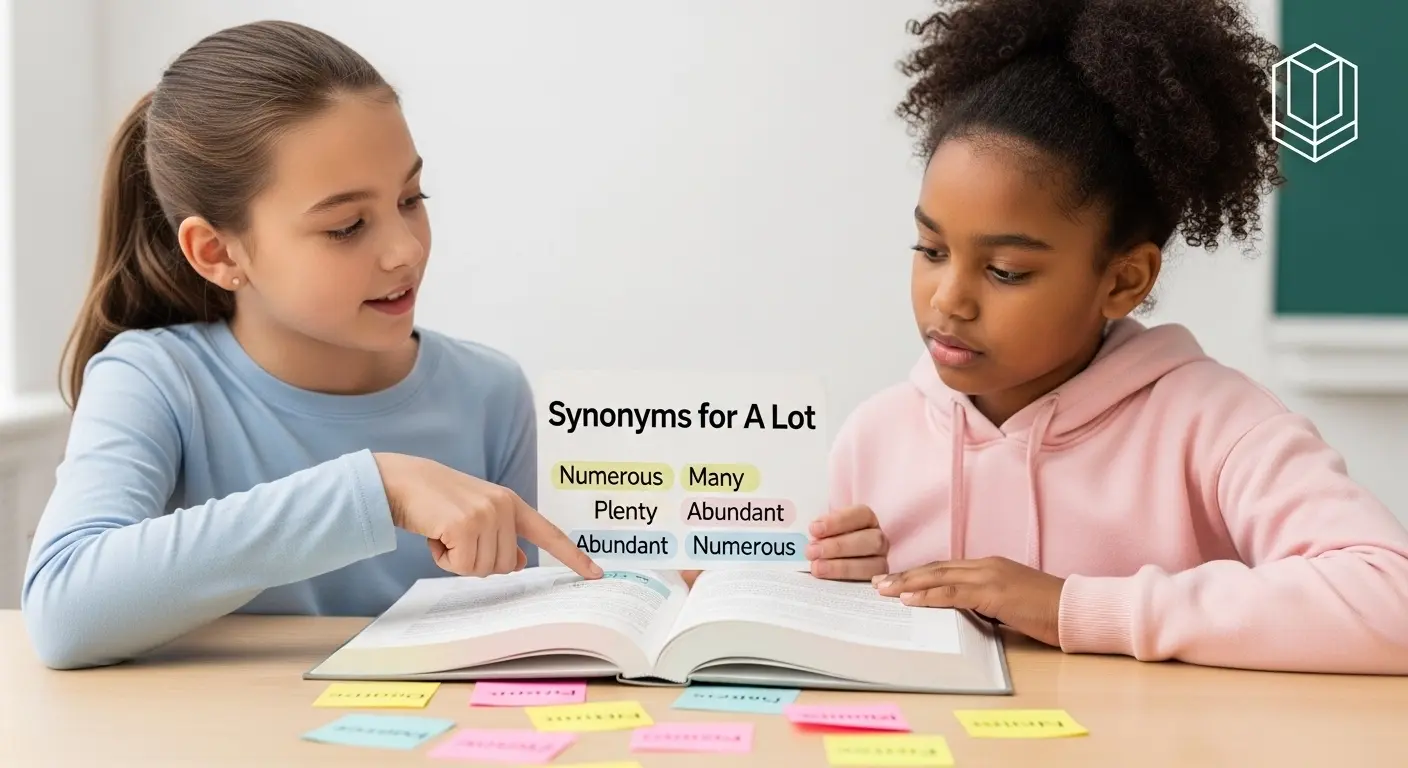
Knowing synonyms for a lot can help students, bloggers, content writers, and daily English users make their writing and speaking more exciting.
Instead of repeating a lot, you can choose from many other words that sound smarter and more natural. This article will give you 50 easy, fun, and real-life synonyms for a lot that anyone can use.
1. Many
Meaning: A large number of things or people.
Explanation: Used to show quantity.
Examples:
- I have many books on my shelf.
- Many people joined the party yesterday.
2. Numerous
Meaning: Very many; a large number.
Explanation: Shows a high quantity.
Examples:
- She has numerous friends in school.
- There are numerous stars in the sky tonight.
3. Countless
Meaning: Too many to count.
Explanation: Implies endless number.
Examples:
- He received countless messages from fans.
- There are countless grains of sand on the beach.
4. Loads
Meaning: A lot of something.
Explanation: Informal way to say “many.”
Examples:
- I have loads of homework today.
- She bought loads of snacks for the trip.
5. Tons
Meaning: Very many; a large amount.
Explanation: Informal, similar to “loads.”
Examples:
- There are tons of apples in the basket.
- I have tons of ideas for my blog.
6. Plenty
Meaning: More than enough.
Explanation: Shows abundance.
Examples:
- There is plenty of food for everyone.
- We have plenty of time to finish the project.
7. Heaps
Meaning: A large pile or number of something.
Explanation: Informal, casual.
Examples:
- She has heaps of clothes in her room.
- We collected heaps of leaves in the yard.
8. Scores
Meaning: Many, usually in a group.
Explanation: Slightly formal.
Examples:
- He won scores of awards at school.
- Scores of fans waited outside the stadium.
9. Masses
Meaning: A large number of people or things.
Explanation: Shows quantity in general.
Examples:
- Masses of people watched the parade.
- There are masses of flowers in the garden.
10. Multitude
Meaning: A very large number.
Explanation: Formal alternative to “alot.”
Examples:
- A multitude of birds filled the sky.
- He has a multitude of ideas for his project.
11. Abundance
Meaning: A very large quantity of something.
Explanation: Emphasizes richness or plenty.
Examples:
- The farm produced an abundance of crops.
- She has an abundance of energy every day.
12. Myriad
Meaning: Countless, a very large number.
Explanation: Formal, poetic use.
Examples:
- The night sky had a myriad of stars.
- There are myriad possibilities in life.
13. Profusion
Meaning: Large amount or quantity.
Explanation: Shows extravagance or overflow.
Examples:
- The garden bloomed in profusion of flowers.
- She offered a profusion of ideas in the meeting.
14. Plethora
Meaning: Too much of something.
Explanation: Formal, often literary.
Examples:
- There was a plethora of choices at the store.
- He owns a plethora of books.
15. Bunch
Meaning: A group or cluster of things.
Explanation: Informal way to say “alot.”
Examples:
- I bought a bunch of bananas.
- She received a bunch of letters today.
16. Galaxy
Meaning: A large group or collection.
Explanation: Figurative use.
Examples:
- He has a galaxy of friends.
- The event attracted a galaxy of artists.
17. Deluge
Meaning: A large quantity, often overwhelming.
Explanation: Suggests sudden and big.
Examples:
- We received a deluge of emails today.
- There was a deluge of rain last night.
18. Flood
Meaning: A large amount at once.
Explanation: Similar to “deluge.”
Examples:
- She got a flood of compliments.
- There was a flood of people at the mall.
19. Slew
Meaning: A large number or quantity.
Explanation: Informal, mostly US English.
Examples:
- He owns a slew of video games.
- There are a slew of options online.
20. Host
Meaning: Many; a large group.
Explanation: Often used for people or things.
Examples:
- A host of volunteers helped at the event.
- There was a host of challenges in the game.
21. Stack
Meaning: A pile of something.
Explanation: Informal, shows quantity.
Examples:
- He has a stack of papers on his desk.
- She brought a stack of pancakes for breakfast.
22. Array
Meaning: A wide range or collection.
Explanation: Shows variety and quantity.
Examples:
- There was an array of colors in the painting.
- The store had an array of snacks.
23. Collection
Meaning: Many things gathered together.
Explanation: Common, simple.
Examples:
- She has a collection of stamps.
- He keeps a collection of old coins.
24. Assemblage
Meaning: A group of things or people.
Explanation: Formal term for a set.
Examples:
- An assemblage of artists attended the fair.
- There was an assemblage of toys on the shelf.
25. Horde
Meaning: A large group, often wild or noisy.
Explanation: Informal, dramatic.
Examples:
- A horde of fans cheered loudly.
- There was a horde of kids at the park.
26. Bundle
Meaning: A lot tied together.
Explanation: Informal, physical or abstract.
Examples:
- I bought a bundle of clothes.
- She has a bundle of ideas for her essay.
27. Crop
Meaning: A large number or group.
Explanation: Figurative use, common in writing.
Examples:
- A new crop of students arrived.
- The city saw a crop of new businesses.
28. Heap
Meaning: A pile or large quantity.
Explanation: Informal, similar to “heaps.”
Examples:
- There is a heap of laundry to do.
- He received a heap of advice.
29. Stackful
Meaning: A full stack; many things together.
Explanation: Informal and visual.
Examples:
- She has a stackful of magazines.
- There is a stackful of letters to reply to.
30. Oodles
Meaning: A lot, usually informal and fun.
Explanation: Playful alternative for “alot.”
Examples:
- She has oodles of friends.
- I have oodles of ideas for the blog.
31. Bagful
Meaning: The amount a bag can hold.
Explanation: Informal, shows quantity.
Examples:
- I bought a bagful of oranges.
- She received a bagful of gifts.
32. Cornucopia
Meaning: A large supply of good things.
Explanation: Formal and figurative.
Examples:
- The buffet had a cornucopia of food.
- She owns a cornucopia of books.
33. Legion
Meaning: A very large number.
Explanation: Formal, often for people or groups.
Examples:
- There are legions of fans online.
- His ideas have a legion of supporters.
34. Armada
Meaning: A large group, often of ships.
Explanation: Figurative for many things.
Examples:
- An armada of cars arrived at the race.
- The festival had an armada of performers.
35. Plethoric
Meaning: Full of; very large in amount.
Explanation: Formal, rare in daily speech.
Examples:
- The garden was plethoric with flowers.
- She has a plethoric collection of art.
36. Superabundance
Meaning: More than enough.
Explanation: Shows excessive quantity.
Examples:
- There was a superabundance of food at the party.
- He has a superabundance of ideas.
37. Overflow
Meaning: More than can be contained.
Explanation: Shows excess.
Examples:
- The river’s overflow caused flooding.
- There is an overflow of messages in my inbox.
38. Excess
Meaning: More than needed.
Explanation: Shows surplus quantity.
Examples:
- He ate an excess of sweets.
- There is an excess of books in the library.
39. Plenitude
Meaning: Fullness or abundance.
Explanation: Formal, literary.
Examples:
- The room was filled with plenitude of joy.
- She has a plenitude of resources for learning.
40. Overabundance
Meaning: Too much of something.
Explanation: Similar to “superabundance.”
Examples:
- The garden had an overabundance of flowers.
- He shows an overabundance of energy.
41. Wealth
Meaning: A large amount of something, not money only.
Explanation: Figurative, shows richness.
Examples:
- She has a wealth of knowledge.
- There is a wealth of resources online.
42. Flock
Meaning: Many together, usually animals or people.
Explanation: Informal or descriptive.
Examples:
- A flock of birds flew over the lake.
- A flock of tourists visited the museum.
43. Congregation
Meaning: A group gathered together.
Explanation: Formal, mostly for people.
Examples:
- The church had a large congregation.
- A congregation of students attended the seminar.
44. Gathering
Meaning: People or things coming together.
Explanation: Simple, everyday word.
Examples:
- There was a gathering of friends in the park.
- The gathering of ideas helped the project.
45. Hegemony
Meaning: Large influence or control.
Explanation: Figurative use, formal.
Examples:
- The company has a hegemony of market power.
- His ideas had hegemony in the discussion.
46. Crowd
Meaning: Many people together.
Explanation: Simple, everyday word.
Examples:
- The concert had a huge crowd.
- A crowd of fans waited outside the stadium.
47. Swarm
Meaning: Many moving together, often insects.
Explanation: Informal or descriptive.
Examples:
- A swarm of bees flew over the garden.
- There was a swarm of students at the library.
48. Bundleful
Meaning: A lot packed together.
Explanation: Informal, playful.
Examples:
- She bought a bundleful of fruits.
- There is a bundleful of letters to send.
49. Multitudinous
Meaning: Very many, numerous.
Explanation: Formal and rare.
Examples:
- The sky was filled with multitudinous stars.
- He has multitudinous responsibilities at work.
50. Gigantic Amount
Meaning: Extremely large number or quantity.
Explanation: Informal, descriptive.
Examples:
- He ate a gigantic amount of pizza.
- The company invested a gigantic amount in new projects.
Conclusion
Learning synonyms for alot can make your writing and speaking more lively and professional. If you are a student, blogger, or content writer, using different words adds variety and keeps readers or listeners engaged. Practice these synonyms in emails, essays, reports, and everyday conversations to sound confident and natural. Over time, replacing “alot” with more precise or creative words will improve your communication, making it richer, smarter, and more interesting.

I am Miles Carter is the lead content creator and language enthusiast behind Englexa.com. With a strong passion for English vocabulary, grammar, and word exploration, Miles helps readers discover clearer ways to express themselves