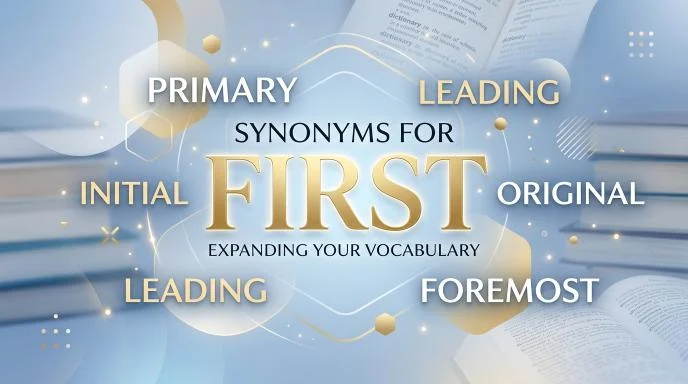
Have you ever written the same word again and again? Many students and writers use the word “first” too much in essays, blogs, and daily talks.
It can make writing sound boring. Imagine telling a story about your first day at school or your first job interview. Using different words can make your sentence more interesting and clear.
The word “first” means coming before all others. It can talk about time, order, rank, or importance. This word is very common in English, so learning synonyms for first is very useful.
Students can use these words in essays. Bloggers and content writers can make articles more creative. Daily English users can also speak better and sound more natural. Learning synonyms for first helps improve vocabulary and communication skills in a simple way.
1. Primary
Meaning:
Something that comes before others in importance or order.
Explanation:
It often means the main or most important thing.
Examples:
- Reading is my primary hobby.
- Safety is our primary concern.
2. Initial
Meaning:
Something that happens at the beginning.
Explanation:
It talks about the starting stage.
Examples:
- My initial plan was simple.
- She gave her initial answer quickly.
3. Earliest
Meaning:
Something that happens before anything else.
Explanation:
It shows the first time in order.
Examples:
- I took the earliest bus today.
- This is my earliest memory.
4. Opening
Meaning:
Something at the start of an event or activity.
Explanation:
It describes the beginning part.
Examples:
- The opening scene was funny.
- He missed the opening speech.
5. Beginning
Meaning:
The point where something starts.
Explanation:
It means the first part of something.
Examples:
- The beginning of the movie was exciting.
- We met at the beginning of summer.
6. Introductory
Meaning:
Something made to introduce a topic.
Explanation:
It helps people learn the basics first.
Examples:
- I took an introductory English class.
- The book has an introductory chapter.
7. Original
Meaning:
The first form of something.
Explanation:
It means not copied or changed.
Examples:
- I still have the original photo.
- Her original idea was brilliant.
8. Pioneer
Meaning:
A person who does something first.
Explanation:
It describes someone leading the way.
Examples:
- She was a pioneer in science.
- My grandfather was a farming pioneer.
9. Foremost
Meaning:
Most important or first in rank.
Explanation:
It shows top importance.
Examples:
- Health should be foremost.
- He is the foremost expert here.
10. Leading
Meaning:
Being ahead of others.
Explanation:
It describes top position or rank.
Examples:
- She is a leading artist.
- This company is leading the market.
11. Chief
Meaning:
The most important person or thing.
Explanation:
It means number one in importance.
Examples:
- Money was his chief problem.
- She is the chief manager.
12. Premier
Meaning:
Best or first in importance.
Explanation:
It often describes top quality.
Examples:
- This is a premier hotel.
- He attended the premier event.
13. Top
Meaning:
Highest or best position.
Explanation:
It means first in ranking.
Examples:
- She got the top score.
- He is at the top level.
14. Front
Meaning:
The part before all others.
Explanation:
It shows position ahead of others.
Examples:
- Sit in the front seat.
- The shop is at the front corner.
15. Head
Meaning:
The main or first person.
Explanation:
It describes leadership.
Examples:
- She is the head teacher.
- He sat at the head table.
16. Principal
Meaning:
Most important or first in rank.
Explanation:
It describes the main thing.
Examples:
- English is my principal subject.
- The principal reason was clear.
17. Main
Meaning:
Most important part of something.
Explanation:
It talks about the primary thing.
Examples:
- The main road is crowded.
- Pizza is the main dish tonight.
18. Alpha
Meaning:
The very first one.
Explanation:
It comes from the Greek alphabet.
Examples:
- Alpha comes before beta.
- He named the project Alpha.
19. Earliest Known
Meaning:
The first one people know about.
Explanation:
It refers to old beginnings.
Examples:
- This is the earliest known map.
- Scientists found the earliest known fossils.
20. Founding
Meaning:
Related to the start of something.
Explanation:
It talks about creation or beginning.
Examples:
- She was a founding member.
- The founding team worked hard.
21. Commencing
Meaning:
Starting something.
Explanation:
It means beginning an action.
Examples:
- The show is commencing now.
- Classes are commencing tomorrow.
22. Intro
Meaning:
The beginning section of something.
Explanation:
It is a short form of introduction.
Examples:
- I liked the song intro.
- The intro was very short.
23. Debut
Meaning:
The first public appearance.
Explanation:
It means showing something for the first time.
Examples:
- Her debut movie became famous.
- He made his debut yesterday.
24. Launching
Meaning:
Starting a new project or product.
Explanation:
It means introducing something new.
Examples:
- They are launching a new app.
- The company is launching shoes soon.
25. Maiden
Meaning:
The very first attempt or event.
Explanation:
It often describes first journeys.
Examples:
- The ship made its maiden trip.
- This was her maiden speech.
26. Early
Meaning:
Happening before expected time.
Explanation:
It means near the beginning.
Examples:
- I woke up early today.
- Early practice helps students.
27. Frontline
Meaning:
At the first or most active position.
Explanation:
It means being at the front.
Examples:
- Nurses worked on the frontline.
- He stayed on the frontline team.
28. Number One
Meaning:
The best or first position.
Explanation:
It describes top ranking.
Examples:
- She became number one.
- This song is number one now.
29. Prime
Meaning:
Most important or best.
Explanation:
It shows high importance.
Examples:
- Morning is prime study time.
- This is a prime example.
30. Headmost
Meaning:
At the very front.
Explanation:
It means first in line or order.
Examples:
- He stood in the headmost row.
- The headmost car stopped suddenly.
31. Topmost
Meaning:
Highest or first position.
Explanation:
It means above all others.
Examples:
- The topmost shelf was dusty.
- She reached the topmost rank.
32. Introductive
Meaning:
Serving as a beginning.
Explanation:
It introduces a subject.
Examples:
- The introductive lesson was easy.
- He gave introductive remarks.
33. Groundbreaking
Meaning:
Something completely new and first.
Explanation:
It introduces new ideas.
Examples:
- The scientist made a groundbreaking discovery.
- This phone has groundbreaking features.
34. Trailblazing
Meaning:
Leading others in a new path.
Explanation:
It means doing something first.
Examples:
- She did trailblazing work.
- His ideas were trailblazing.
35. Initializing
Meaning:
Starting a process.
Explanation:
It means making something begin.
Examples:
- The computer is initializing now.
- We are initializing the system.
36. Earliest Recorded
Meaning:
The first example written down.
Explanation:
It refers to old records.
Examples:
- This is the earliest recorded case.
- Historians found the earliest recorded story.
37. Preliminary
Meaning:
Coming before the main part.
Explanation:
It means an early step.
Examples:
- We had a preliminary meeting.
- The team shared preliminary results.
38. Opening Move
Meaning:
The first action in a plan.
Explanation:
It means the starting step.
Examples:
- His opening move surprised us.
- She made the opening move carefully.
39. Kickoff
Meaning:
The beginning of an activity.
Explanation:
It often starts events or projects.
Examples:
- The kickoff meeting was fun.
- Our game starts with kickoff.
40. Introductory Stage
Meaning:
The beginning phase of something.
Explanation:
It means the early learning part.
Examples:
- We are in the introductory stage.
- The project passed the introductory stage.
41. Genesis
Meaning:
The origin or beginning of something.
Explanation:
It means where something starts.
Examples:
- This book explains the genesis of art.
- We discussed the genesis of the idea.
42. Dawn
Meaning:
The first appearance or start.
Explanation:
It often means a new beginning.
Examples:
- We left at dawn.
- It was the dawn of change.
43. Onset
Meaning:
The beginning of something.
Explanation:
It describes the start point.
Examples:
- Rain started at the onset of evening.
- The onset of winter was cold.
44. Birth
Meaning:
The starting point of something new.
Explanation:
It means creation or beginning.
Examples:
- The company saw the birth of new ideas.
- The birth of the project excited everyone.
45. Root
Meaning:
The original source or start.
Explanation:
It means where something begins.
Examples:
- Trust is the root of friendship.
- This problem has a deep root.
46. Firsthand
Meaning:
Coming directly from the source.
Explanation:
It means from personal experience.
Examples:
- I heard the news firsthand.
- She shared firsthand details.
47. Initial Phase
Meaning:
The early stage of something.
Explanation:
It means the first period.
Examples:
- The initial phase was difficult.
- We finished the initial phase today.
48. Starting Point
Meaning:
The place where something begins.
Explanation:
It describes the first step.
Examples:
- This chapter is a starting point.
- School was my starting point.
49. First-Class
Meaning:
The best quality or top level.
Explanation:
It means excellent or leading.
Examples:
- They offer first-class service.
- The hotel provides first-class food.
50. Vanguard
Meaning:
The front group leading change.
Explanation:
It means being ahead of others.
Examples:
- The team stayed in the vanguard.
- Artists in the vanguard inspire people.
Conclusion
Learning synonyms for first can make your English stronger and more interesting. Using different words helps your writing sound fresh and natural. Students can improve essays and homework. Bloggers and content writers can create better articles for readers and search engines. These words also help during conversations, presentations, and emails.
Practice using these synonyms every day. Try them in school assignments, social media posts, business emails, and daily speaking. Small changes in vocabulary can make a big difference in communication skills. The more words you learn, the easier it becomes to express ideas clearly.
Keep reading, writing, and practicing new vocabulary. Over time, these synonyms for first will become a natural part of your English. Good vocabulary helps you sound smarter, more confident, and more creative in every situation.

I am Hunter James is the lead content writer and language researcher at Englexa.com. He specializes in English vocabulary, synonyms, grammar explanations, and easy-to-understand language guides. With a passion for simplifying complex words and expressions, Hunter helps readers expand their vocabulary and improve their writing skills.