Have you ever been asked to introduce yourself and explain who you are? Maybe you filled out an online form, created a social media profile, or joined a new school. In all these situations, your identity helps people know more about you.
For example, a student may use a school ID card to show their identity. A blogger may build an online identity through articles and social media posts. These examples show how important identity is in everyday life.
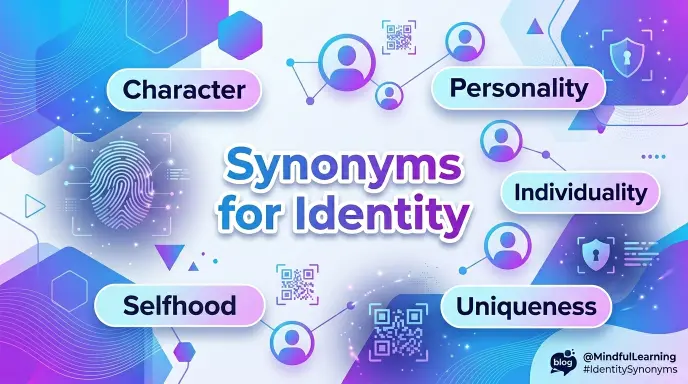
The word identity means who a person is. It includes a person’s name, personality, background, and unique qualities. Learning synonyms for identity can help you avoid repeating the same word again and again.
Students can use these words in essays. Bloggers and content writers can make their content more engaging. Daily English users can improve their speaking and writing skills. Understanding different synonyms for identity will help you communicate more clearly and confidently.
1. Character
Meaning: The qualities that make a person who they are.
Explanation: It describes a person’s nature and behavior.
Examples:
- She has a kind character.
- His character makes him easy to trust.
2. Personality
Meaning: The way a person thinks and acts.
Explanation: It shows a person’s unique behavior.
Examples:
- Her personality is very friendly.
- I like his cheerful personality.
3. Individuality
Meaning: The traits that make someone different.
Explanation: It focuses on uniqueness.
Examples:
- She expresses her individuality through art.
- Everyone should value their individuality.
4. Selfhood
Meaning: A person’s sense of being themselves.
Explanation: It refers to personal identity.
Examples:
- Travel helped her discover selfhood.
- He values his sense of selfhood.
5. Nature
Meaning: The basic qualities of a person.
Explanation: It describes inner traits.
Examples:
- Her nature is calm and caring.
- Helping others is in his nature.
6. Essence
Meaning: The most important part of someone.
Explanation: It represents a person’s core.
Examples:
- Kindness is her essence.
- The speech captured his essence.
7. Being
Meaning: The state of existing as a person.
Explanation: It refers to someone’s existence.
Examples:
- Respect every human being.
- Her whole being felt happy.
8. Self
Meaning: The person someone truly is.
Explanation: It refers to one’s true identity.
Examples:
- Be your true self.
- He finally accepted himself.
9. Persona
Meaning: The image shown to other people.
Explanation: It is a public identity.
Examples:
- Her online persona is fun.
- He created a strong persona.
10. Profile
Meaning: A description of a person.
Explanation: It contains personal details.
Examples:
- Update your profile today.
- Her profile looks professional.
11. Reputation
Meaning: What people think about someone.
Explanation: It reflects public opinion.
Examples:
- He has a great reputation.
- Her reputation is excellent.
12. Image
Meaning: The way others see someone.
Explanation: It is a public impression.
Examples:
- She maintains a positive image.
- His image improved over time.
13. Name
Meaning: The word used to identify someone.
Explanation: It is a basic form of identity.
Examples:
- Write your name here.
- Everyone knows her name.
14. Status
Meaning: A person’s position in society.
Explanation: It shows social standing.
Examples:
- His status improved quickly.
- She enjoys a high status.
15. Role
Meaning: The function a person performs.
Explanation: It describes a person’s duty.
Examples:
- She has a leadership role.
- His role is very important.
16. Position
Meaning: A place or rank someone holds.
Explanation: It refers to a job or standing.
Examples:
- He accepted a new position.
- Her position requires experience.
17. Standing
Meaning: Respect or importance in a group.
Explanation: It shows social recognition.
Examples:
- He has good standing.
- Her standing is well known.
18. Classification
Meaning: A category someone belongs to.
Explanation: It groups people or things.
Examples:
- The classification was updated.
- Students checked their classification.
19. Category
Meaning: A group with similar features.
Explanation: It is a type or class.
Examples:
- This belongs in another category.
- Choose the correct category.
20. Label
Meaning: A word used to describe someone.
Explanation: It is a form of identification.
Examples:
- Don’t judge by a label.
- He disliked that label.
21. Designation
Meaning: An official title or name.
Explanation: It is a formal identifier.
Examples:
- Her designation changed recently.
- He earned a new designation.
22. Title
Meaning: A name showing rank or position.
Explanation: It identifies a role.
Examples:
- She received a new title.
- His title sounds impressive.
23. Signature
Meaning: A unique mark of a person.
Explanation: It is used for identification.
Examples:
- Please add your signature.
- Her signature is elegant.
24. Trademark
Meaning: A special feature that identifies someone.
Explanation: It makes a person recognizable.
Examples:
- Confidence is her trademark.
- That smile is his trademark.
25. Badge
Meaning: A symbol used for identification.
Explanation: It shows membership or authority.
Examples:
- Wear your badge today.
- His badge was visible.
26. Credentials
Meaning: Proof of qualifications or identity.
Explanation: They verify who someone is.
Examples:
- Show your credentials.
- Her credentials were accepted.
27. Background
Meaning: A person’s history or experience.
Explanation: It helps define identity.
Examples:
- He has a strong background.
- Her background is interesting.
28. Heritage
Meaning: Traditions passed through generations.
Explanation: It reflects cultural identity.
Examples:
- She values her heritage.
- Their heritage is rich.
29. Origin
Meaning: The place someone comes from.
Explanation: It shows beginnings.
Examples:
- People asked about his origin.
- Her origin is well known.
30. Roots
Meaning: Family or cultural beginnings.
Explanation: It connects people to the past.
Examples:
- Never forget your roots.
- His roots are important.
31. Culture
Meaning: Shared beliefs and traditions.
Explanation: It influences identity.
Examples:
- Culture shapes people.
- She loves her culture.
32. Ethnicity
Meaning: A group with shared heritage.
Explanation: It reflects cultural background.
Examples:
- Ethnicity can influence traditions.
- People respect every ethnicity.
33. Community
Meaning: A group of connected people.
Explanation: It creates a shared identity.
Examples:
- She supports her community.
- The community welcomed him.
34. Membership
Meaning: Being part of a group.
Explanation: It shows belonging.
Examples:
- Membership has benefits.
- His membership was approved.
35. Affiliation
Meaning: A connection with a group.
Explanation: It shows association.
Examples:
- State your affiliation clearly.
- Her affiliation is public.
36. Association
Meaning: A connection with people or groups.
Explanation: It links people together.
Examples:
- His association helped him.
- The association grew larger.
37. Connection
Meaning: A link between people.
Explanation: It creates relationships.
Examples:
- They share a strong connection.
- The connection remains strong.
38. Recognition
Meaning: Being known or identified.
Explanation: It means receiving acknowledgment.
Examples:
- She earned recognition quickly.
- His work gained recognition.
39. Identification
Meaning: The act of proving who someone is.
Explanation: It directly relates to identity.
Examples:
- Bring identification with you.
- Identification is required today.
40. Distinction
Meaning: A quality that makes someone different.
Explanation: It highlights uniqueness.
Examples:
- Her distinction is creativity.
- That distinction matters.
41. Uniqueness
Meaning: Being different from others.
Explanation: It describes individuality.
Examples:
- Celebrate your uniqueness.
- His uniqueness stands out.
42. Authenticity
Meaning: Being real and genuine.
Explanation: It reflects true identity.
Examples:
- People admire authenticity.
- Her authenticity inspires others.
43. Individualism
Meaning: Independence and self-expression.
Explanation: It focuses on personal freedom.
Examples:
- Individualism is important.
- He values individualism.
44. Presence
Meaning: The way someone appears to others.
Explanation: It creates an impression.
Examples:
- She has a strong presence.
- His presence filled the room.
45. Face
Meaning: The image shown to others.
Explanation: It represents public identity.
Examples:
- He showed a brave face.
- She kept a happy face.
46. Personage
Meaning: An important or notable person.
Explanation: It refers to a distinguished individual.
Examples:
- The personage arrived early.
- Everyone greeted the personage.
47. Figure
Meaning: A known or important person.
Explanation: It identifies someone recognized.
Examples:
- She became a public figure.
- The figure inspired many.
48. Entity
Meaning: A person or thing with existence.
Explanation: It refers to an independent identity.
Examples:
- Every entity has value.
- The company became a separate entity.
49. Person
Meaning: A human being.
Explanation: It is a basic individual identity.
Examples:
- She is a kind person.
- Every person matters.
50. Soul
Meaning: The inner spirit of a person.
Explanation: It reflects deep identity.
Examples:
- Her soul feels peaceful.
- He has a gentle soul.
FAQs About Synonyms for Identity
What does identity mean?
Identity means who a person is and the qualities that make them unique.
Why should I learn synonyms for identity?
They improve vocabulary, writing, speaking, and communication skills.
Which synonym is closest to identity?
Identification, self, individuality, and personality are among the closest synonyms.
Are these synonyms useful for SEO writing?
Yes. They help create natural and engaging content.
Can students use these words in essays?
Yes. They can make essays more professional and interesting.
Conclusion
Learning synonyms for identity can greatly improve your English vocabulary and writing skills. Instead of using the same word repeatedly, you can choose from many alternatives that better match your meaning and context.
These words are valuable for students, bloggers, content writers, and anyone who wants to communicate more effectively. If you are writing an essay, creating blog content, sending emails, or having daily conversations, using varied vocabulary will make your language stronger and more engaging.
Practice these synonyms regularly in your writing and speaking. The more often you use them, the more natural they will feel. Over time, your confidence, communication skills, and overall English fluency will continue to grow.

I am Bobby Ray is the passionate voice behind Englexa.com, where language meets clarity and creativity. With a deep love for English grammar, vocabulary building, and smart communication, Bobby helps readers improve their writing skills in a simple and practical way.