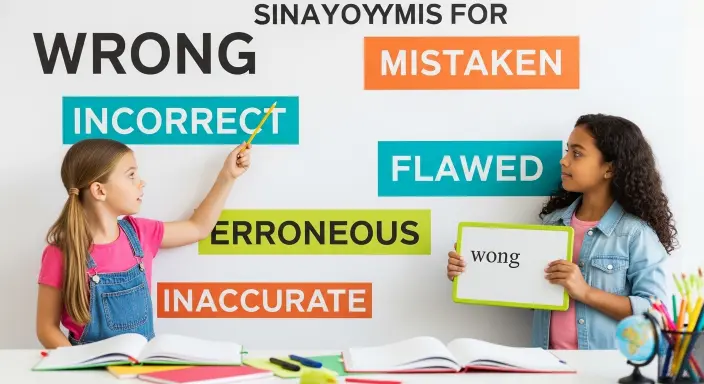
Have you ever said something and later thought, “Oops, that was wrong”? It happens to everyone. Maybe you answered a question in class or sent a message with a mistake. The word “wrong” is simple, but we use it a lot.
In easy English, wrong means not correct or not right. It can be about answers, actions, or ideas.
Learning synonyms for wrong helps you speak and write better. Students can improve essays. Bloggers and writers can avoid repeating the same word. And in daily life, you can sound more natural.
In this guide, you will learn 50 easy synonyms for wrong meanings and examples. Let’s start!
1. Incorrect
Meaning: Not right or not correct.
Explanation: Used for mistakes in answers.
Examples:
- Your answer is incorrect.
- I gave an incorrect number.
2. Mistaken
Meaning: Something based on a wrong idea.
Explanation: Used when someone thinks wrong.
Examples:
- I was mistaken about the time.
- She felt mistaken about him.
3. Inaccurate
Meaning: Not exact or not correct.
Explanation: Used for facts or data.
Examples:
- The report is inaccurate.
- His guess was inaccurate.
4. False
Meaning: Not true.
Explanation: Opposite of truth.
Examples:
- That story is false.
- He made a false claim.
5. Erroneous
Meaning: Having an error.
Explanation: Formal word for wrong.
Examples:
- The data is erroneous.
- She made an erroneous choice.
6. Faulty
Meaning: Not working well or wrong.
Explanation: Used for things or ideas.
Examples:
- The machine is faulty.
- That logic is faulty.
7. Flawed
Meaning: Has a problem or mistake.
Explanation: Not perfect.
Examples:
- The plan is flawed.
- His idea seems flawed.
8. Off
Meaning: Not correct.
Explanation: Informal use.
Examples:
- Your math is off.
- Something feels off today.
9. Misguided
Meaning: Based on wrong thinking.
Explanation: Wrong direction or idea.
Examples:
- It was a misguided choice.
- His plan felt misguided.
10. Improper
Meaning: Not right or suitable.
Explanation: Used for behavior.
Examples:
- That was improper behavior.
- She used improper words.
11. Untrue
Meaning: Not true.
Explanation: Same as false.
Examples:
- The rumor is untrue.
- His claim is untrue.
12. Unjust
Meaning: Not fair or right.
Explanation: About fairness.
Examples:
- That rule is unjust.
- The decision felt unjust.
13. Unfair
Meaning: Not equal or right.
Explanation: About treatment.
Examples:
- That game was unfair.
- She got unfair marks.
14. Invalid
Meaning: Not correct or acceptable.
Explanation: Used for rules or claims.
Examples:
- The ticket is invalid.
- His point is invalid.
15. Unsound
Meaning: Not strong or correct.
Explanation: Weak reasoning.
Examples:
- The idea is unsound.
- His logic is unsound.
16. Illogical
Meaning: Does not make sense.
Explanation: No clear reason.
Examples:
- That choice is illogical.
- His answer sounds illogical.
17. Misleading
Meaning: Gives wrong idea.
Explanation: Causes confusion.
Examples:
- The ad is misleading.
- That line is misleading.
18. Corrupt
Meaning: Not honest or right.
Explanation: Often about people.
Examples:
- The system is corrupt.
- He made a corrupt deal.
19. Defective
Meaning: Broken or not right.
Explanation: Used for products.
Examples:
- The phone is defective.
- I got a defective item.
20. Inexact
Meaning: Not fully correct.
Explanation: Slightly wrong.
Examples:
- The number is inexact.
- His answer is inexact.
21. Off-base
Meaning: Completely wrong.
Explanation: Informal phrase.
Examples:
- Your guess is off-base.
- That idea is off-base.
22. Bogus
Meaning: Fake or not real.
Explanation: Informal use.
Examples:
- That claim is bogus.
- He gave a bogus excuse.
23. Unreliable
Meaning: Not dependable or correct.
Explanation: Cannot trust.
Examples:
- The source is unreliable.
- His info is unreliable.
24. Fallacious
Meaning: Based on wrong belief.
Explanation: Logical mistake.
Examples:
- That idea is fallacious.
- His claim is fallacious.
25. Misjudged
Meaning: Judged wrongly.
Explanation: Wrong opinion.
Examples:
- I misjudged her.
- He misjudged the risk.
26. Mistyped
Meaning: Typed wrongly.
Explanation: Writing error.
Examples:
- I mistyped the name.
- She mistyped the code.
27. Miscalculated
Meaning: Calculated wrongly.
Explanation: Math mistake.
Examples:
- He miscalculated the cost.
- I miscalculated time.
28. Off-track
Meaning: Going in wrong direction.
Explanation: Not correct path.
Examples:
- We are off-track.
- The plan went off-track.
29. Unfit
Meaning: Not right for use.
Explanation: Not suitable.
Examples:
- He is unfit for the job.
- That tool is unfit.
30. Inappropriate
Meaning: Not suitable or right.
Explanation: Wrong situation.
Examples:
- That joke is inappropriate.
- His words were inappropriate.
31. Dishonest
Meaning: Not truthful.
Explanation: Not honest.
Examples:
- He is dishonest.
- That answer is dishonest.
32. Inconsistent
Meaning: Not steady or correct.
Explanation: Changes wrongly.
Examples:
- His story is inconsistent.
- The results are inconsistent.
33. Unreal
Meaning: Not real or true.
Explanation: False idea.
Examples:
- That story feels unreal.
- His claim is unreal.
34. Outdated
Meaning: No longer correct.
Explanation: Old and wrong.
Examples:
- The data is outdated.
- His facts are outdated.
35. Confused
Meaning: Mixed up or wrong.
Explanation: Not clear thinking.
Examples:
- I feel confused.
- He looked confused.
36. Twisted
Meaning: Changed in a wrong way.
Explanation: Not true form.
Examples:
- The story is twisted.
- His words got twisted.
37. Skewed
Meaning: Not straight or fair.
Explanation: Biased or wrong.
Examples:
- The data is skewed.
- His view is skewed.
38. Distorted
Meaning: Changed wrongly.
Explanation: Not clear or true.
Examples:
- The sound is distorted.
- His words were distorted.
39. Misstated
Meaning: Said wrongly.
Explanation: Error in speaking.
Examples:
- He misstated the fact.
- I misstated the number.
40. Wrongheaded
Meaning: Very wrong idea.
Explanation: Poor thinking.
Examples:
- That plan is wrongheaded.
- His idea is wrongheaded.
41. Blundered
Meaning: Made a big mistake.
Explanation: Serious error.
Examples:
- He blundered badly.
- I blundered in class.
42. Careless
Meaning: Not careful, so wrong.
Explanation: Leads to mistakes.
Examples:
- That was careless work.
- He made a careless error.
43. Clumsy
Meaning: Done badly or wrongly.
Explanation: Not smooth.
Examples:
- That was clumsy writing.
- He made a clumsy move.
44. Uncertain
Meaning: Not sure or correct.
Explanation: Doubtful.
Examples:
- I feel uncertain.
- His answer is uncertain.
45. Dubious
Meaning: Likely wrong or doubtful.
Explanation: Not trusted.
Examples:
- That claim is dubious.
- His idea sounds dubious.
46. Questionable
Meaning: May be wrong.
Explanation: Not sure correct.
Examples:
- That choice is questionable.
- His action is questionable.
47. Unconvincing
Meaning: Does not feel right.
Explanation: Hard to believe.
Examples:
- His story is unconvincing.
- That excuse is unconvincing.
48. Misplaced
Meaning: Put in wrong place.
Explanation: Not correct position.
Examples:
- I misplaced my keys.
- That trust was misplaced.
49. Errant
Meaning: Going wrong way.
Explanation: Not correct path.
Examples:
- An errant shot hit wide.
- His errant move failed.
50. Unjustified
Meaning: Not right or fair.
Explanation: No good reason.
Examples:
- That anger is unjustified.
- His claim is unjustified.
Conclusion
Learning synonyms for wrong can improve your English in many ways. It helps you write better, speak clearly, and avoid repeating the same word. Students can create stronger essays. Bloggers can improve SEO. And daily conversations become more natural. Try using these words in emails, school tasks, and daily talks. Practice one new word every day.
Over time, your vocabulary will grow, and your confidence will increase. Keep practicing by reading and applying these words in real situations. Over time, you’ll naturally expand your vocabulary and feel more confident choosing the right word for every situation where something isn’t quite right.

I am Miles Carter is the lead content creator and language enthusiast behind Englexa.com. With a strong passion for English vocabulary, grammar, and word exploration, Miles helps readers discover clearer ways to express themselves